
Advantages of Dry Mortar Production Lines – A Summary
2026/08/21
1. High Production Efficiency with Stable Output
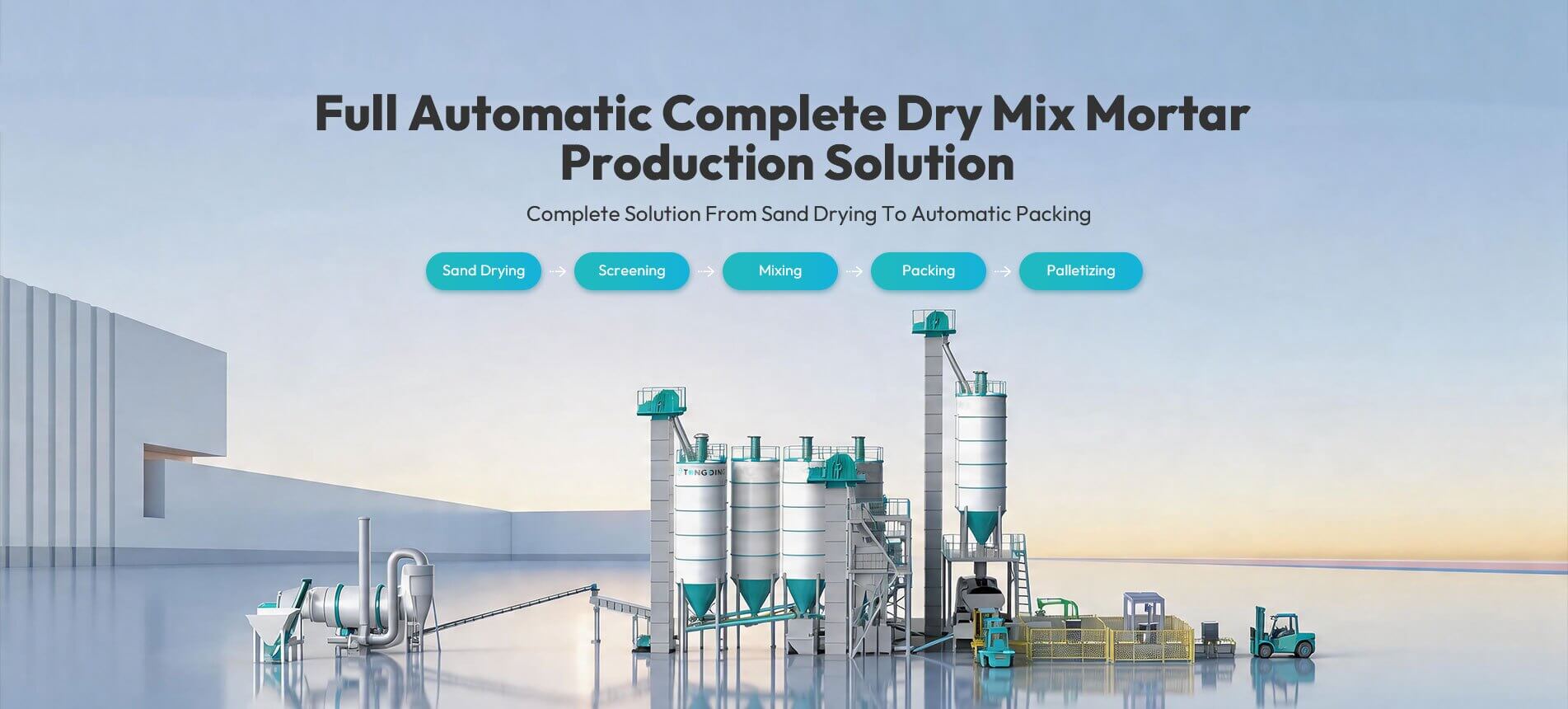
Dry Mortar Production Lines is highly automated and operated by a PLC control system.
- Continuous operation: A single line can produce hundreds to over a thousand tons per day.
- Quick recipe switching: Different mortar types — such as masonry mortar, plastering mortar, and tile adhesive — can be produced by simply adjusting parameters in the control system.
2. Superior Product Quality with Precise Formulation
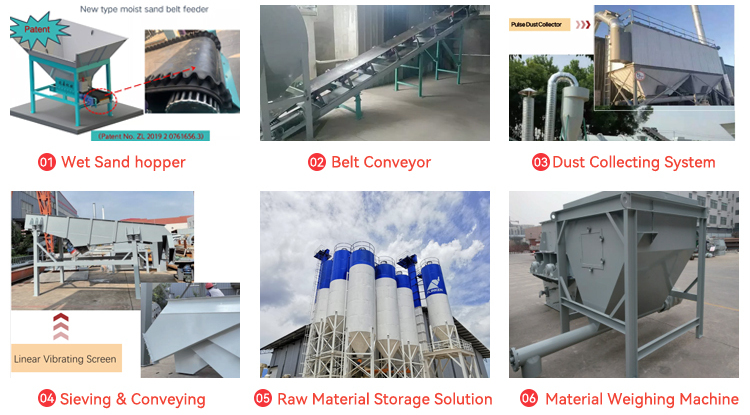
- Accurate batching: Electronic weighing systems ensure material proportion errors are kept under 0.5%, far outperforming manual operations. This guarantees consistency in mortar strength, workability, and other key performance indicators.
- Uniform mixing: High-efficiency twin-shaft paddle mixers or ploughshare mixers achieve mixing uniformity of over 99%, preventing clumping or segregation.
- Environmental compliance: Enclosed production minimizes dust emissions. Finished products meet national environmental standards, including limits on VOCs and heavy metals.
3. Cost Savings with Significant Economic Benefits
- Reduced material waste: Automated batching minimizes human error, improving raw material utilization by 5% to 10%.
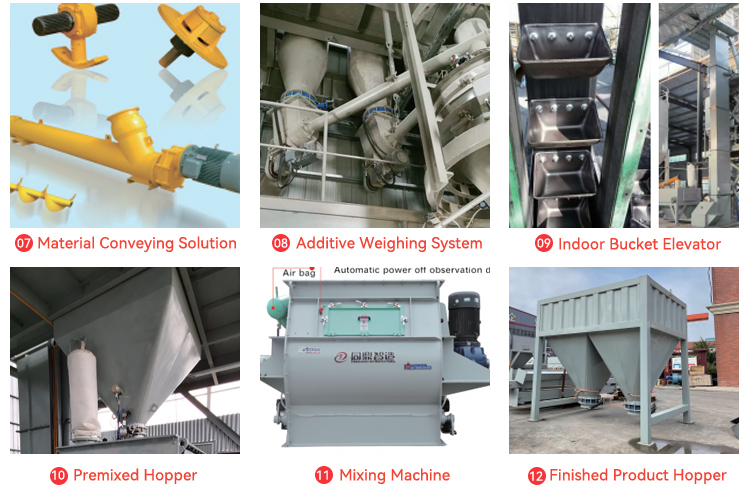
- Low labor costs: A single line requires only 2 to 3 operators, saving over 70% in labor compared to traditional production methods.
- Optimized energy consumption: New-generation lines use energy-efficient motors and hot-air circulation drying systems, reducing energy use by 15% to 20% over conventional processes.
4. Environmental and Safety Advantages
- Dust control: Fully enclosed pipeline conveying combined with pulse dust collectors keeps workplace dust concentration at or below 10mg/m³, well within the national standard of 30mg/m³.
- Low noise: Vibration-damping designs keep noise levels below 75dB, compared to approximately 85dB for standard production lines.
- Waste recycling: Dust collected by the filtration system can be reintroduced into production, achieving near-zero emissions.
5. Flexible Adaptation to Market Demands
- Modular design: Production modules can be expanded as needed, including dry mortar and specialty mortars such as thermal insulation and waterproofing variants, ensuring a high return on investment.
- Diverse packaging options: Supports bulk tanker loading, ton bags, and small bags (25-50kg) to suit various distribution channels — from construction sites to retail outlets.
6. Long-Term Maintenance and Intelligent Upgrades
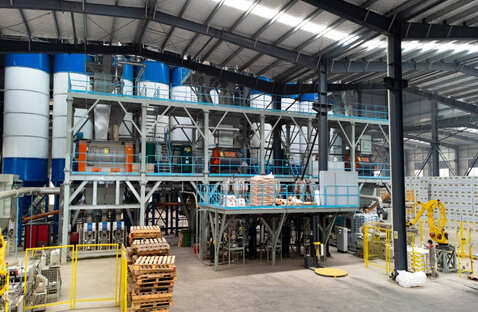
- Remote monitoring: IoT technology enables real-time equipment status tracking, fault alerts, and reduced downtime.
- Data traceability: Production data is automatically recorded, facilitating quality tracking and process optimization.
Comparison with Traditional On-Site Mixing
| Criterion | Dry Mortar Production Line | On-Site Mixing |
|---|---|---|
| Quality Consistency | High (standardized batching) | Low (relies on worker experience) |
| Construction Efficiency | Ready to use, no on-site preparation needed | Time-consuming mixing, high waste potential |
| Environmental Impact | Nearly dust-free | Significant dust pollution |
| Total Cost | Long-term savings on materials and labor | Low short-term cost, high long-term loss |
Recommended Applications
🏗️ Large-Scale Infrastructure High-speed rail, expressways — requiring large volumes of high-quality mortar
🏙️ Urban Developments Areas with strict environmental regulations (e.g., tier-one cities)
⚡ Specialized Engineering Projects with specific performance requirements, such as nuclear power plants or waterproofing applications