
How to Dry Sand Efficiently with a Rotary Sand Dryer
How to Dry Sand Efficiently with a Rotary Sand Dryer
Wet sand creates problems across many industries. High moisture content affects material flow, storage stability, weighing accuracy, and final product quality. In concrete production, excess moisture changes the water-cement ratio. In foundries, wet sand may create steam during casting. In glass and silica processing plants, unstable moisture levels can interrupt downstream production.
A rotary sand dryer removes moisture from sand through continuous heating and material movement. The system is widely used in construction material plants, dry mortar production lines, silica sand processing plants, mining operations, and industrial aggregate facilities.
This article explains why sand drying matters, what materials can be processed, how a rotary sand dryer works, and how to choose suitable equipment for industrial production.
Why Dry Sand Matters
Stable Material Flow
Wet sand often sticks to conveyor belts, hopper walls, and storage bins. Material buildup reduces conveying efficiency and increases manual cleaning work.
After drying, sand becomes free-flowing and easier to transport through screw conveyors, bucket elevators, vibrating screens, and packing systems.
This improves production continuity in dry mortar plants, concrete batching systems, and bulk material handling facilities.
Better Concrete and Mortar Quality
Moisture directly affects concrete consistency and mortar strength.
If sand moisture fluctuates during batching, operators must constantly adjust the water ratio. Inconsistent moisture may lead to:
Cracks in finished concrete
Weak bonding strength
Uneven curing
Reduced compressive strength
Dry sand allows more accurate batching control and stable product quality.
Lower Transportation Costs
Water increases bulk material weight.
For large-scale sand transportation, excess moisture raises shipping costs without adding usable material value. Drying reduces the total transport weight and improves loading efficiency.
This is especially useful for exported silica sand, frac sand, and construction aggregates.
Required for Industrial Processing
Some industrial applications require very low moisture content.
Examples include:
Glass manufacturing
Foundry casting
Ceramic production
Frac sand processing
Chemical mineral processing
In foundries, wet sand may generate steam during molten metal pouring. In frac sand production, moisture affects pneumatic conveying and storage performance.
Many plants require final moisture below 1%.
What Materials Can Be Dried?
A rotary sand dryer can process many types of sand and granular materials.
Common materials include:
River sand
Manufactured sand (M-sand)
Silica sand
Quartz sand
Sea sand
Construction sand
Mortar sand
Frac sand
Foundry sand
Garnet sand
Chromite sand
Limestone sand
Basalt sand
Granite sand
Material moisture usually ranges from 5% to 25%, depending on the source and washing process.
Some washed silica sand slurry materials may contain even higher moisture levels before dewatering.
Main Equipment in a Sand Drying Plant
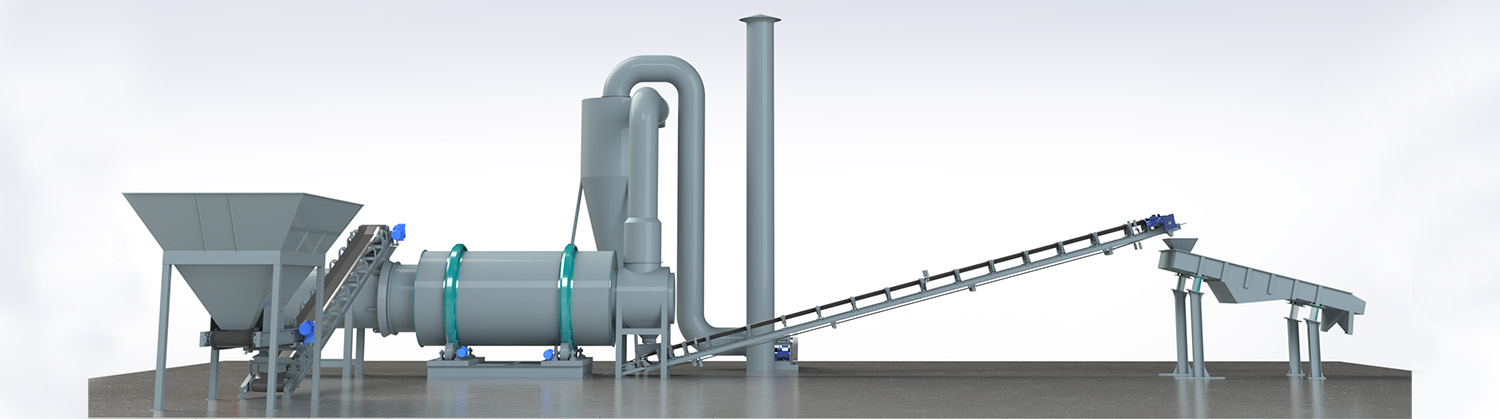
A complete sand drying plant contains more than a rotary dryer. The system normally includes feeding, heating, conveying, dust collection, and automatic control equipment.
Rotary Drum Dryer
The rotary drum dryer is the core machine in the production line.
The drum rotates slowly while internal lifting plates raise and scatter the sand through the hot air stream. This continuous cascading movement increases heat exchange efficiency.
Most sand drying plants use a single-pass rotary dryer because of:
Simple structure
Stable operation
Continuous production
Easy maintenance
Large processing capacity
Depending on the project, triple-pass rotary dryers may also be used for compact installations.
Feeding System
The feeding system delivers wet sand into the rotary drum at a controlled rate.
Equipment may include:
Belt conveyors
Screw feeders
Vibrating feeders
Storage hoppers
Stable feeding prevents material blockage and improves drying consistency.
Burner and Heating System
The burner generates hot air for moisture evaporation.
Common fuel options include:
Natural gas
Diesel
Coal
Heavy oil
Biomass pellets
Hot air temperature normally ranges from 80°C to 800°C depending on the material and heating method.
Direct heating systems are widely used because of higher thermal efficiency and lower operating costs.
Dust Collection System
Sand drying produces dust during material lifting and air circulation.
A dust collection system keeps the production environment clean and reduces emissions.
Typical equipment includes:
Cyclone collectors
Pulse bag filters
Induced draft fans
Dust removal pipelines
Industrial baghouse systems can achieve dust collection efficiency above 99%.
Intelligent Control System
Modern sand drying plants use PLC control systems for automatic operation.
The system monitors:
Drum temperature
Exhaust temperature
Material moisture
Burner operation
Drum speed
Airflow volume
Automatic control reduces labor requirements and improves fuel efficiency.
How a Rotary Sand Dryer Works
Step 1: Feeding Wet Sand
Wet sand enters the rotary drum through the feeding conveyor.
The feeding rate must remain stable to maintain uniform drying performance.
Step 2: Heating the Drum
The burner produces hot air that flows through the drum.
Depending on the design, airflow may move in the same direction as the material or in the opposite direction.
The heating system transfers thermal energy into the wet sand particles.
Step 3: Material Lifting and Cascading
Inside the drum, lifting plates continuously raise and scatter the sand.
This movement exposes more material surface area to hot air.
Uniform cascading prevents local overheating and improves drying efficiency.
Step 4: Moisture Evaporation
As the sand contacts the hot air stream, moisture evaporates gradually.
The drum inclination pushes the material toward the discharge end during rotation.
Typical moisture reduction:
Initial moisture: 10%–25%
Final moisture: 0.5%–1%
Some industrial silica sand applications require even lower final moisture.
Step 5: Material Discharge
After drying, the finished sand exits the drum through the discharge section.
The dried material may then move to:
Vibrating screens
Storage silos
Packing systems
Dry mortar production lines
Concrete batching plants
Sand Dryer Technical Parameters
|
Parameter |
Typical Range |
|
Capacity |
3–80 TPH |
|
Final Moisture |
0.5%–1% |
|
Drum Diameter |
1.2–3.6 m |
|
Drum Length |
8–28 m |
|
Heat Source |
Gas, diesel, coal, biomass |
|
Heating Type |
Direct or indirect |
|
Inlet Temperature |
80°C–800°C |
|
Control System |
Manual or PLC automatic |
Actual configuration depends on:
Sand type
Moisture level
Production target
Fuel cost
Installation area
Environmental regulations
Common Applications of Sand Drying Plants
Dry Mortar Production
Dry mortar plants require low-moisture sand for stable mixing performance.
Rotary sand dryers are commonly installed before mortar mixing systems.
Concrete Batching Plants
Dry sand improves weighing precision and concrete consistency.
Many commercial concrete plants use dedicated sand drying systems during cold or rainy seasons.
Silica Sand Processing
Silica sand drying is common in:
Glass manufacturing
Solar glass production
Quartz processing
Ceramic industries
The drying system must maintain stable moisture and avoid contamination.
Foundry Industry
Foundry sand must remain dry before metal casting.
Moisture inside the mold may produce steam and affect casting quality.
Frac Sand Processing
Oil and gas industries use dried frac sand for hydraulic fracturing operations.
Low moisture improves storage, transportation, and pneumatic conveying performance.
Customer Case: Sand Drying Plant in Peru
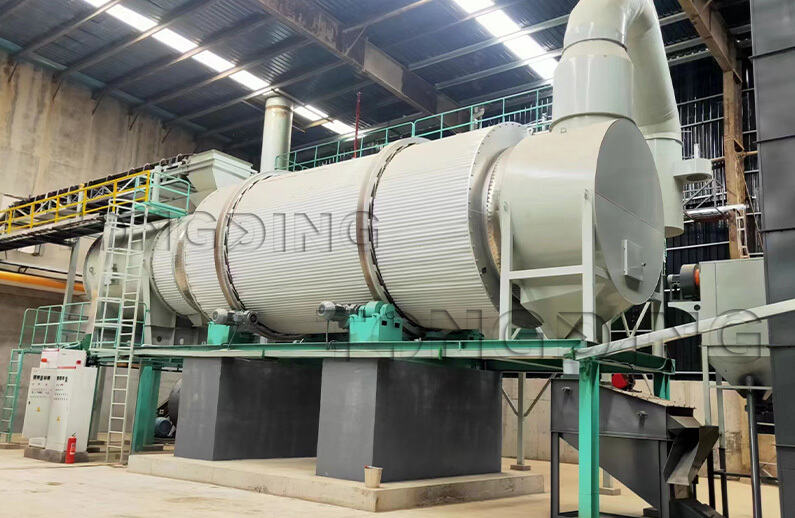
Project Background
A concrete aggregate supplier in Peru faced unstable moisture levels in river sand and crushed construction sand.
The wet material reduced batching accuracy and slowed production efficiency.
Installed Equipment
The customer installed:
30 TPH rotary sand dryer
Natural gas burner
Belt conveyor system
Pulse dust collector
Automatic control cabinet
Production Results
After installation:
Sand moisture decreased from 12% to 0.5%
Fuel consumption dropped by 25%
Concrete batching speed improved
Material waste decreased
The dried sand was directly supplied to commercial concrete plants.
Customer Case: Silica Sand Drying Plant in Mexico
Project Background
A mining company in Mexico needed to process wet silica sand slurry generated during mineral washing operations.
The material contained high moisture and could not be sold directly.
Installed Equipment
The production line included:
Pre-dewatering equipment
50 TPH rotary sand dryer
High-efficiency burner system
PLC control system
Industrial baghouse dust collector
Production Results
The final moisture reached approximately 1%.
The dried silica powder was later used in cement additives and industrial mineral products.
The project converted waste slurry into a reusable commercial material.
How to Choose the Right Sand Dryer
Material Moisture
High-moisture materials require larger drums and stronger heating systems.
Slurry materials may also require pre-dewatering equipment.
Production Capacity
The dryer capacity must match the entire production line.
Undersized equipment creates bottlenecks and increases operating costs.
Fuel Availability
Fuel cost directly affects long-term operating expenses.
Natural gas systems are cleaner, while coal and biomass systems may reduce fuel costs in some regions.
Environmental Requirements
Dust emissions and exhaust temperature must comply with local environmental regulations.
Many projects require high-efficiency dust collection systems.
Plant Layout
Installation space affects equipment selection.
Triple-pass dryers are sometimes used in compact production sites where floor space is limited.
Conclusion
A rotary sand dryer removes moisture efficiently while supporting continuous industrial production. The system improves material flow, reduces transport weight, stabilizes batching accuracy, and supports low-moisture requirements in construction and mineral processing industries.
For silica sand plants, mortar production lines, foundry operations, and aggregate processing facilities, a properly configured sand drying system can improve production stability and reduce operating costs over the long term.