
How to Choose the Right Dry Mortar Mixer for Your Production Line
How to Choose the Right Dry Mortar Mixer for Your Production Line
Selecting the right mixer is one of the most important decisions when investing in a dry mortar production line. The mixer directly determines product consistency, production capacity, mixing efficiency, and ultimately the quality of the finished mortar. Whether you manufacture tile adhesive, masonry mortar, wall putty, self-leveling compounds, or repair mortar, choosing the correct mixing technology can significantly improve production efficiency while reducing operating costs.
Today’s dry mortar industry offers several types of industrial mixers, each designed for different materials, production capacities, and investment budgets. The three most commonly used mixers are the Ribbon Mixer, Ploughshare Mixer, and Twin Shaft Paddle Mixer. Although all three are designed to blend dry powder materials, their structures, mixing principles, performance, and suitable applications differ considerably.
This comprehensive guide explains how each mixer works, compares their advantages and disadvantages, and helps you determine which solution best fits your production requirements.
Why the Mixer Is the Core Equipment in a Dry Mortar Production Line
A dry mortar production line consists of multiple systems including raw material storage, conveying, weighing, drying, screening, mixing, packaging, and automatic control. Among all these systems, the mixer performs the most critical task—it combines every raw material into a homogeneous finished product that meets quality standards.
Even if batching accuracy reaches ±0.2%, poor mixing performance can still result in uneven additive distribution, inconsistent strength, poor workability, and unstable product quality. For manufacturers producing premium dry mortar products, mixing quality often determines market competitiveness.
The Mixer Directly Influences Product Quality
Modern dry mortar formulations usually contain multiple components including cement, sand, fly ash, gypsum, limestone powder, polymers, cellulose ether, starch ether, fibers, pigments, and various chemical additives. Some additives account for less than 0.1% of the total formula, making uniform dispersion extremely important.
A high-performance mixer ensures that every ingredient is evenly distributed throughout the batch, allowing contractors to achieve consistent bonding strength, water retention, anti-cracking performance, and application properties on every construction site.
The Mixer Determines Production Capacity
Different mixer designs offer significantly different mixing cycles. While a traditional ribbon mixer may require approximately 15–20 minutes per batch, a twin shaft paddle mixer can complete the same process in as little as three to five minutes. Shorter mixing cycles increase hourly production capacity without expanding factory space.
For manufacturers planning long-term production growth, choosing the appropriate mixer can reduce future equipment upgrades and maximize return on investment.
The Mixer Affects Operating Costs
Mixing efficiency also influences energy consumption, labor requirements, maintenance costs, and equipment wear. Selecting equipment that matches production volume prevents unnecessary operating expenses while improving production stability.
Main Types of Dry Mortar Mixers
Industrial dry mortar plants generally use three mixing technologies. Each has unique structural characteristics and is suitable for different production scenarios.
1. Ribbon Mixer
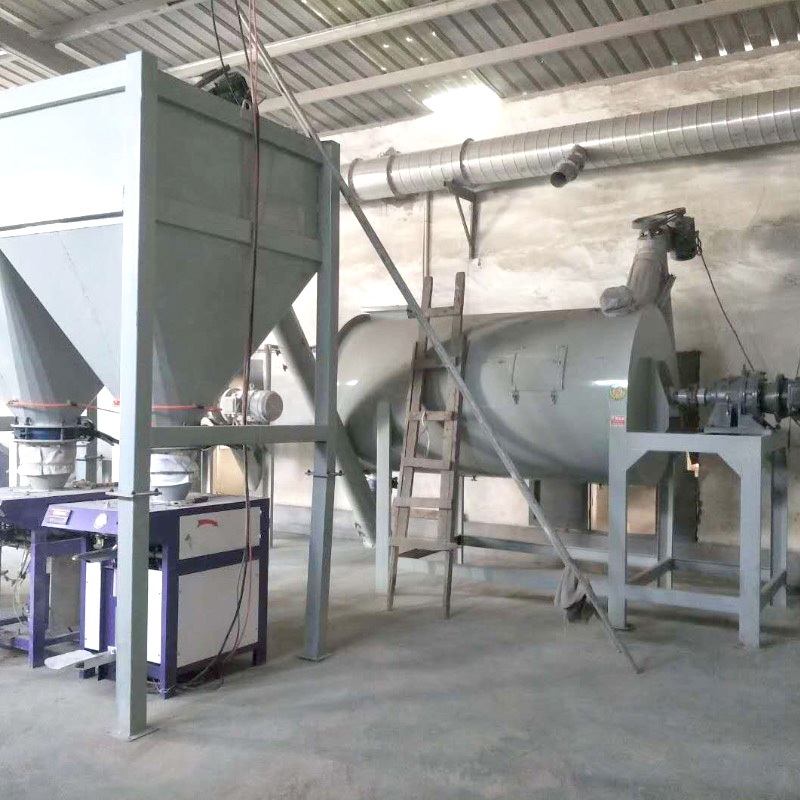
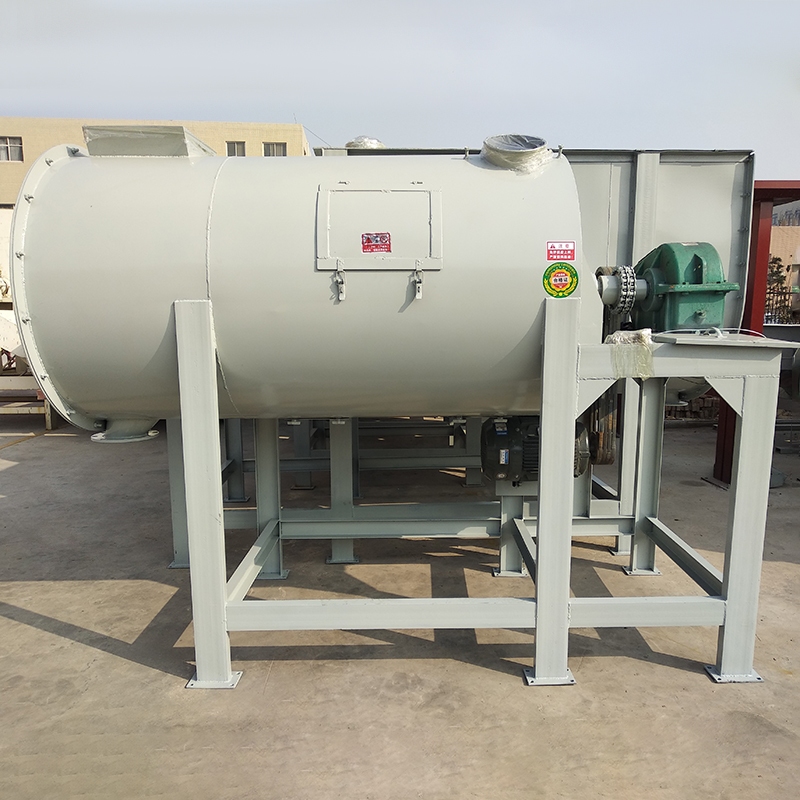
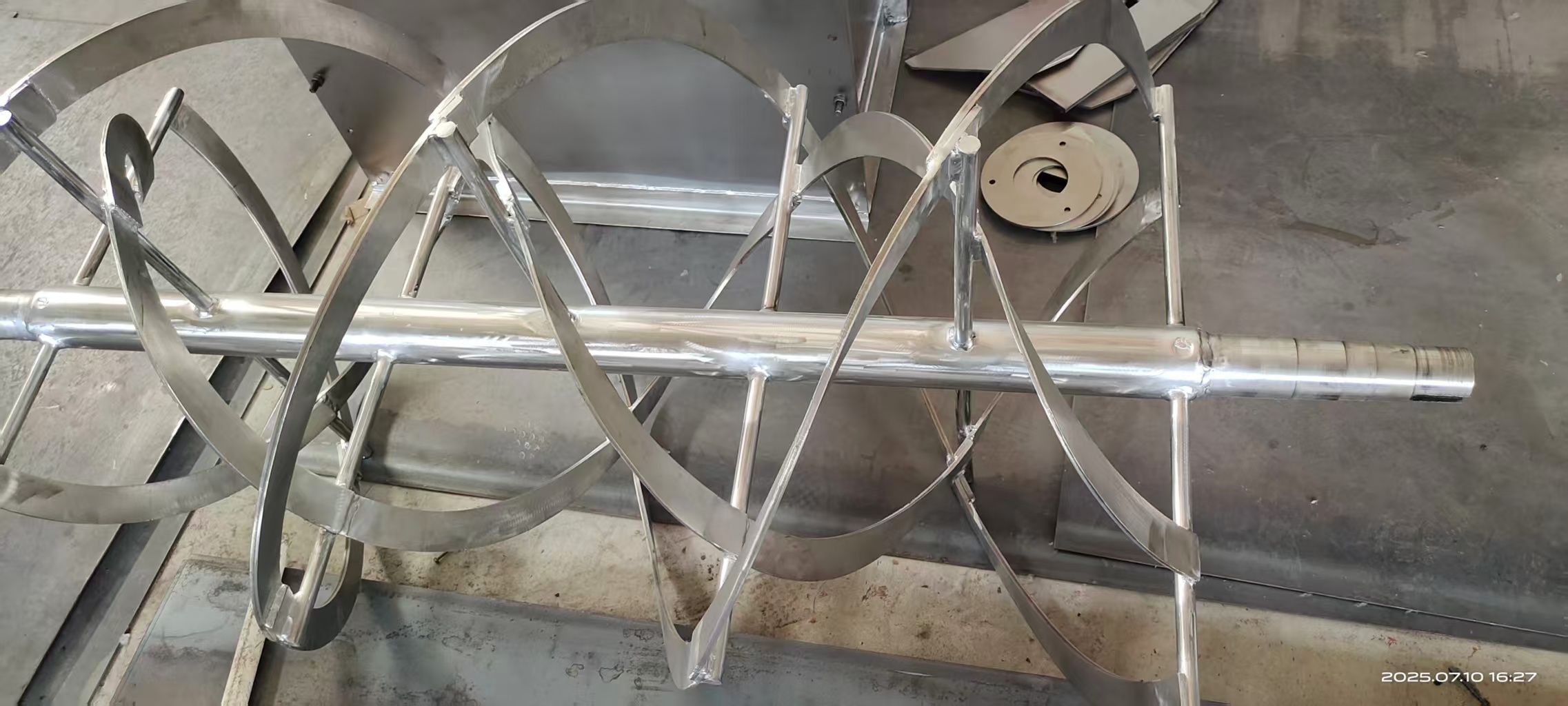
The ribbon mixer is one of the most widely used mixing machines for small and medium-sized dry mortar plants. Inside the horizontal mixing chamber, inner and outer helical ribbons rotate simultaneously, pushing materials in opposite directions to achieve continuous circulation and uniform mixing.
Its simple mechanical structure, low manufacturing cost, and reliable operation make it an excellent choice for startups and regional mortar producers with moderate production requirements.
Typical Applications
- Masonry Mortar
- Plastering Mortar
- Wall Putty
- Gypsum Mortar
- Dry Mix Mortar
- Repair Mortar
Typical Production Capacity
- 500–2,000 kg per batch
- Approximately 2–6 TPH depending on formulation
Working Principle
During operation, the outer ribbon moves materials toward the center while the inner ribbon pushes materials toward both ends. This counter-flow movement creates continuous convection, ensuring powder materials are repeatedly lifted, dispersed, and blended until a uniform mixture is achieved.
This mixing method is particularly effective for conventional dry mortar formulations that do not require extremely high shear force.
Advantages of Ribbon Mixers
- Simple and reliable mechanical structure
- Low equipment investment
- Easy installation and maintenance
- Excellent mixing uniformity for standard dry powders
- Suitable for multiple mortar formulations
- Stable performance with long service life
- Widely available spare parts
Limitations of Ribbon Mixers
- Longer mixing cycle compared with high-speed mixers
- Higher energy consumption per batch
- Not ideal for highly adhesive materials
- Lower shear force limits dispersion of some specialty additives
- Start-up dry mortar manufacturers
- Building material distributors
- Small and medium production plants
- Wall putty production
- Masonry mortar production
- General construction mortar
Internal Resources
Industry References
- ASTM International – Standards for Construction Materials
- ISO – Industrial Equipment Quality Standards
- Portland Cement Association (PCA)
In the next section, we will explore the Ploughshare Mixer and the Twin Shaft Paddle Mixer in detail, comparing their working principles, production performance, suitable materials, and investment considerations to help you make the most informed equipment selection.
Please read this article:
Ploughshare Mixer vs Twin Shaft Paddle Mixer – Which Is Right for Your Dry Mortar Plant?