Real Customer Case: Manufactured Sand Drying with Three‑Pass Dryer
Manufactured Sand Drying with Three‑Pass Dryer
Against the backdrop of rapid infrastructure development worldwide, demand for construction aggregates, dry-mixed mortar and ready-mixed concrete continues to rise. Manufactured sand, a core raw material for dry mortar production lines and concrete batching plants, has high moisture content after washing, tends to agglomerate, and is heavily affected by rainfall and climate. Natural sun drying is extremely inefficient and cannot meet the needs of continuous large-scale production, often becoming a bottleneck that limits the output of dry mortar production lines and sand drying systems.
Many overseas building material enterprises have long used traditional single-drum dryers. Common problems include low thermal efficiency, high energy consumption, large footprint, severe wear, uneven drying, and difficulty meeting local environmental emission regulations. This article presents a real case from TONGDING MACHINERY FACTORY on manufactured sand drying for the overseas construction industry – a complete story covering project pain points, customized solutions, and actual production results.
I. Customer Background & Core Pain Points
1. Customer Profile
The customer is a large local building materials group, specializing in the production and sales of construction aggregates, washed manufactured sand, and dry-mixed mortar raw materials. They supply sand and stone materials for urban infrastructure, real estate, and road projects.
Their existing traditional single-drum dryer was severely aged and could no longer keep up with growing order demand. They urgently needed a modern drying line that is energy-efficient, durable, compact, and compliant with local environmental standards.
2. Key Production Challenges
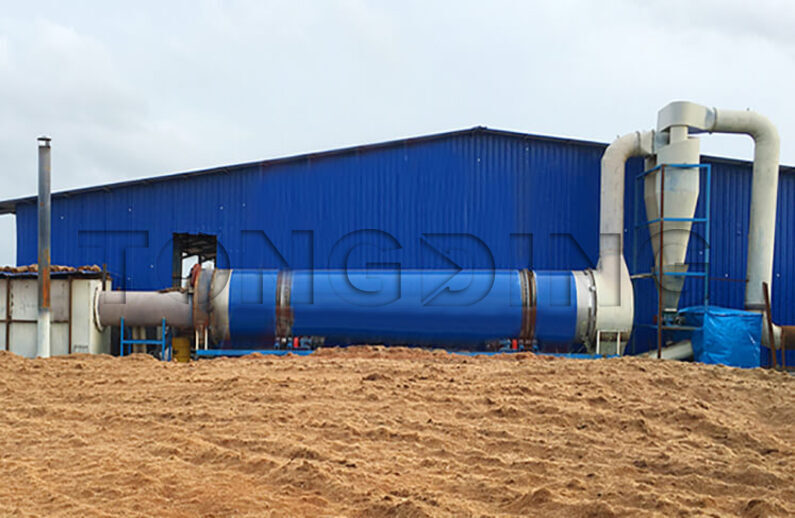
- High material moisture: Washed manufactured sand has initial moisture content of 15%–18%, causing wet agglomeration that cannot be directly used for mortar or concrete batching.
- Large capacity gap: The old equipment’s limited output forced them to reduce production or buy finished sand during peak seasons, squeezing profit margins.
- Poor drying quality: Single-drum heat exchange is insufficient, leading to uneven drying and fluctuating moisture content in the final product, affecting construction material standards.
- High operating cost: Low thermal efficiency results in high fuel consumption and long-term energy expenses.
- Severe abrasion: Manufactured sand is highly abrasive, causing rapid wear to the drum shell and lifting plates. Frequent replacement of wear parts and long downtime for maintenance.
- Site and environmental restrictions: The factory layout is compact; traditional long-drum dryers cannot be arranged. Strict dust control regulations made the old dryer’s dust collection system inadequate.
II. Customized Three-Pass Drying Solution
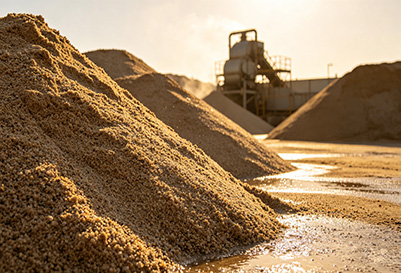
Based on the customer’s site conditions, climate, material characteristics (high-hardness, high-moisture manufactured sand), and the requirement of final moisture ≤1%, we customized a complete three-pass dryer production line with a professional dust collection system, meeting overseas factory standards.
1. Compact triple‑drum structure – fits narrow overseas sites
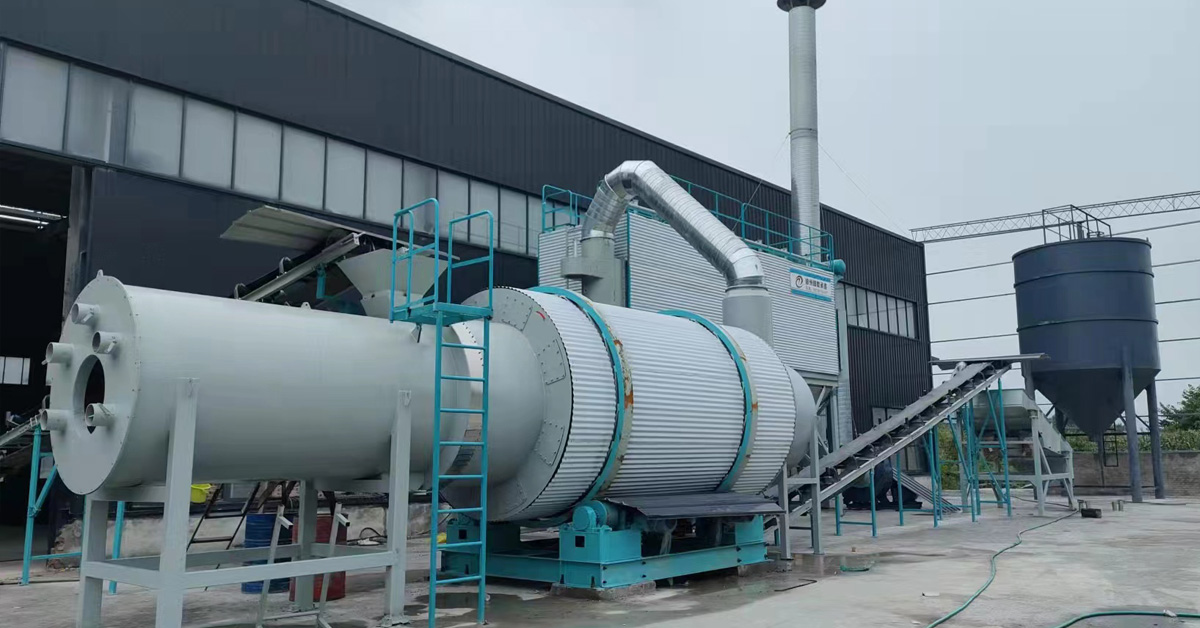
The classic nested triple‑pass design makes the machine compact, short in length, and occupies only 1/3 the floor space of a single‑drum dryer with the same capacity.
It can be installed using existing plant space or old equipment foundations, eliminating large‑scale civil work, shortening installation time, and reducing overseas construction costs.
2. Efficient heat exchange – uniform drying & energy saving
Material passes sequentially through the inner, middle and outer drums, extending the contact time with hot air. Combined with multi‑angle lifting plates, the sand is continuously thrown, scattered and dispersed, preventing material accumulation, wall sticking and agglomeration. This greatly improves thermal efficiency and ensures uniform drying – perfectly suited for stable production of construction sand.
3. Enhanced wear resistance – suitable for continuous sand processing
Given the high hardness and strong abrasiveness of manufactured sand, key parts of the equipment are made of thickened plates and wear‑resistant lifting structures, providing excellent impact and erosion resistance.
Ideal for 24/7 continuous operation, it significantly reduces the frequency of wear part replacement, lowers maintenance costs and minimizes downtime losses.
4. Efficient dust collection – meets local environmental regulations
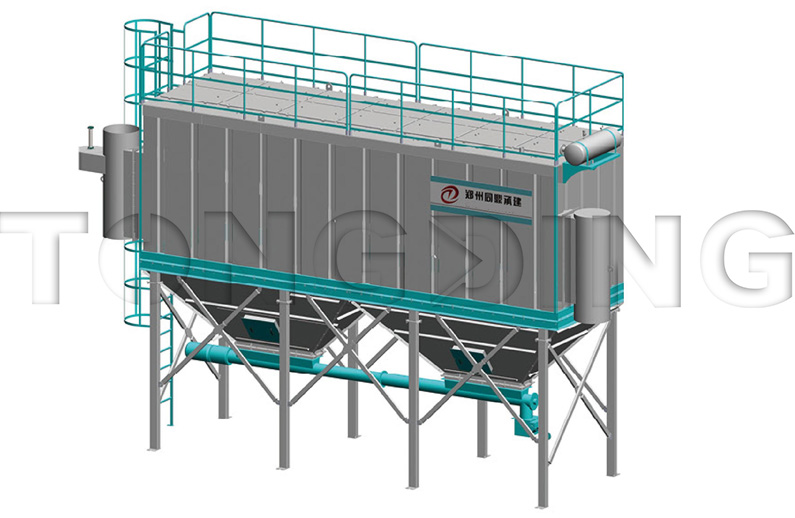
The entire production line features a fully sealed structure. The downstream system includes a cyclone dust collector + pulse bag filter two‑stage dust removal, achieving high dust collection efficiency, ensuring exhaust emissions meet standards, and passing local environmental inspections – avoiding regulatory risks.
5. Multiple heat source options – adapts to local energy conditions
The dryer can be flexibly adapted to various heat sources such as diesel, natural gas, biomass, etc., allowing customers to choose according to local energy prices and supply conditions, helping them control fuel costs reasonably.
III. Project Results After Commissioning
After installation and stable operation, all indicators met expectations and customer feedback has been positive.
- Production capacity significantly increased – a single machine fully covers daily and peak order demand with stable production rhythm.
- Final manufactured sand moisture is consistently controlled below 1%, with loose, non‑agglomerated material fully meeting overseas construction, dry‑mixed mortar and concrete specifications.
- Thermal efficiency improved markedly, fuel consumption greatly reduced – outstanding energy-saving advantages over long‑term operation, effectively controlling production costs.
- Stable operation, low failure rate, excellent wear resistance – reduced frequent maintenance, ensuring continuous mass production.
- Workshop dust control is excellent, production environment clean, fully compliant with local environmental requirements.
- High automation, simple operation, low labor input – well adapted to high overseas labor costs.
IV. Industry Adaptability Advantages
- Specialized for construction industry: Suitable for manufactured sand, river sand, recycled construction aggregates, crushed sand, etc.
- Strong adaptability for overseas projects: Compact footprint, easy installation, wear‑resistant, environmentally compliant.
- Energy saving & cost reduction: Three‑pass heat exchange technology reduces fuel consumption from the source, increasing profit margins.
- Controllable quality: Uniform and stable output moisture, supporting standardized production of high‑end construction aggregates.
- Complete after‑sales support: Standardized equipment + mature overseas installation, commissioning and technical guidance services.
V. Conclusion
By replacing their old dryer with the three‑pass dryer, this overseas building material enterprise completely solved their difficult issues: drying high‑moisture manufactured sand, capacity shortage, high energy consumption, and environmental non‑compliance. They achieved upgraded production capacity, improved product quality, energy saving, cost reduction, and compliant production – multiple benefits.
The three‑pass dryer, with its compact structure, superior wear resistance, high drying efficiency, energy saving and environmental advantages, has been widely used in construction, aggregate processing, dry‑mixed mortar and related industries worldwide.
We can customize a complete drying line solution according to different countries’ site sizes, material parameters, capacity requirements, and energy conditions – providing overseas customers with high‑value drying equipment and technical support.
Nina
Senior Sales Engineer | Drying Technology Consultant
“Helping overseas customers solve high‑moisture manufactured sand drying problems – cutting energy cost by 30%, reducing moisture to ≤1%, and ensuring stable production.”
— Overseas construction sand processing plant