
Rotary Sand Dryer Guide
Rotary Sand Dryer Guide
Sand dryers are widely used in construction materials, dry mortar production, mining, and industrial mineral processing. This article explains the working principle, structure, applications, and advantages of rotary sand drying systems.
Why Does Sand Need to Be Dried?
Wet sand creates several production problems in industrial applications. Moisture control is necessary for stable processing and product consistency.
Poor Material Flow
Wet sand tends to stick together during conveying and storage. Material buildup inside hoppers, silos, and conveyors can interrupt production and increase maintenance work.
Reduced Concrete and Mortar Quality
In concrete batching and dry mortar production, unstable sand moisture changes the water ratio inside the mixture.
- Uneven mixing
- Reduced bonding strength
- Surface cracking
- Lower compressive strength
What Is a Sand Dryer?
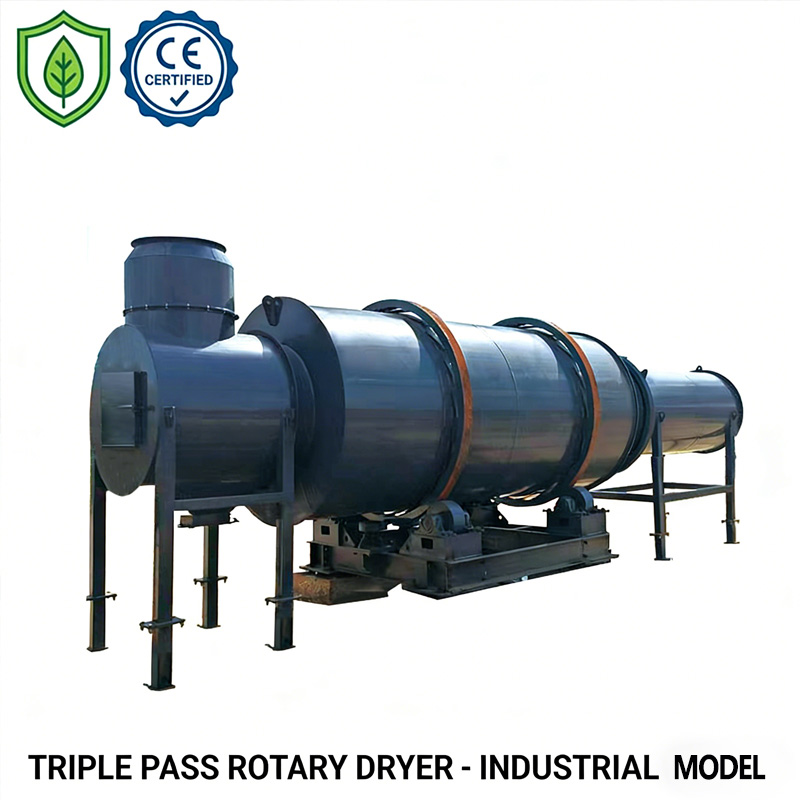
A sand dryer is industrial drying equipment designed to remove moisture from wet sand through heat transfer and continuous material movement.
Most industrial sand drying systems use a rotary drum dryer structure. Inside the rotating drum, wet sand contacts hot air while internal lifting plates continuously raise and scatter the material.
- River sand
- Silica sand
- Sea sand
- Quartz sand
- Mortar sand
- Manufactured sand
- Foundry sand
- Frac sand
Main Components of a Sand Dryer
Rotary Drum
The rotary drum is the core component of the drying system. Internal lifting plates scatter the material through the hot air stream for uniform drying.
Burner and Heating System
The burner generates the hot air required for moisture evaporation.
- Natural gas
- Diesel
- Coal
- Biomass fuel
Dust Collection System
Industrial baghouse systems can achieve dust collection efficiency above 99%.
How Does a Sand Dryer Work?
Step 1 — Feeding Wet Sand
Wet sand enters the rotary drum through the feeding system.
Step 2 — Heating the Dryer
The burner produces hot air that flows through the rotary drum.
Step 3 — Lifting and Cascading
Internal lifting plates repeatedly raise and scatter the material to improve heat exchange efficiency.
Step 4 — Moisture Evaporation
The moisture gradually evaporates while the material moves through the drum.
Step 5 — Discharging Dry Sand
The dried sand exits through the discharge section and moves to storage or packing systems.
Sand Dryer Technical Parameters
| Parameter | Typical Range |
|---|---|
| Capacity | 3–80 TPH |
| Final Moisture | 0.5%–1% |
| Heat Source | Gas, diesel, coal, biomass |
| Heating Type | Direct or indirect |
Customer Case in Meri, Malaysia
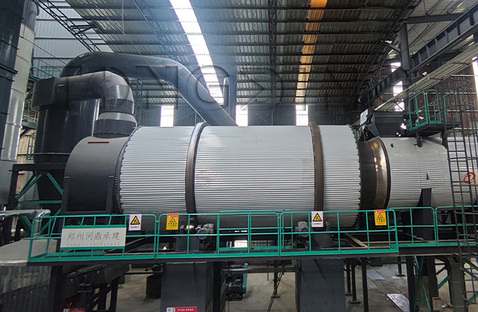
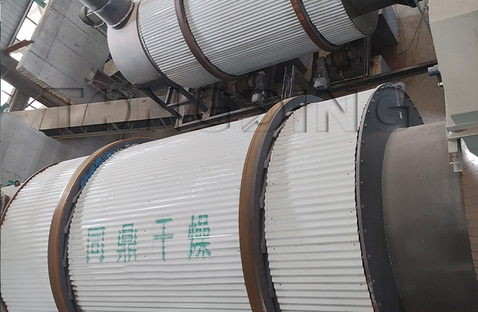
Tongding installed a complete dry mixed mortar production line for a customer in Meri, Malaysia.
- TDSJ-4 Dry Mortar Mix Plant, 30–60 T/H
- TDS6215 Sand Dryer, 10–15 T/H
- Automatic conveying system
- Dust collection system
- PLC automatic control system
The production line improved sand drying efficiency, stabilized mortar mixing quality, and reduced operating costs.
FAQ About Sand Dryers
What is a sand dryer used for?
A sand dryer removes moisture from wet sand for construction materials, dry mortar production, silica sand processing, and foundry applications.
What is the final moisture content after drying?
Most rotary sand dryers reduce moisture to approximately 0.5%–1%.
What fuel can be used in a sand dryer?
Common fuels include natural gas, diesel, coal, and biomass fuel.
Conclusion
A sand dryer is an important piece of equipment in construction material production, mining, and industrial mineral processing.
Rotary sand dryers are widely used because of their continuous operation, stable drying performance, and large processing capacity.