
Tile Adhesive Production Line: Complete Manufacturing Process Explained (2026 Guide)
Tile Adhesive Production Line: Complete Manufacturing Process Explained
Discover how modern tile adhesive is manufactured—from raw material preparation to automated batching, high-efficiency mixing, intelligent packaging, and turnkey factory solutions. Learn the complete tile adhesive manufacturing process used by professional dry mortar plants worldwide.
What Is a Tile Adhesive Production Line?
Tile adhesive has become one of the fastest-growing construction materials in the global building industry. Compared with traditional cement mortar, modern tile adhesive offers higher bonding strength, better flexibility, excellent water resistance, and longer service life, making it the preferred solution for residential, commercial, and industrial construction projects.
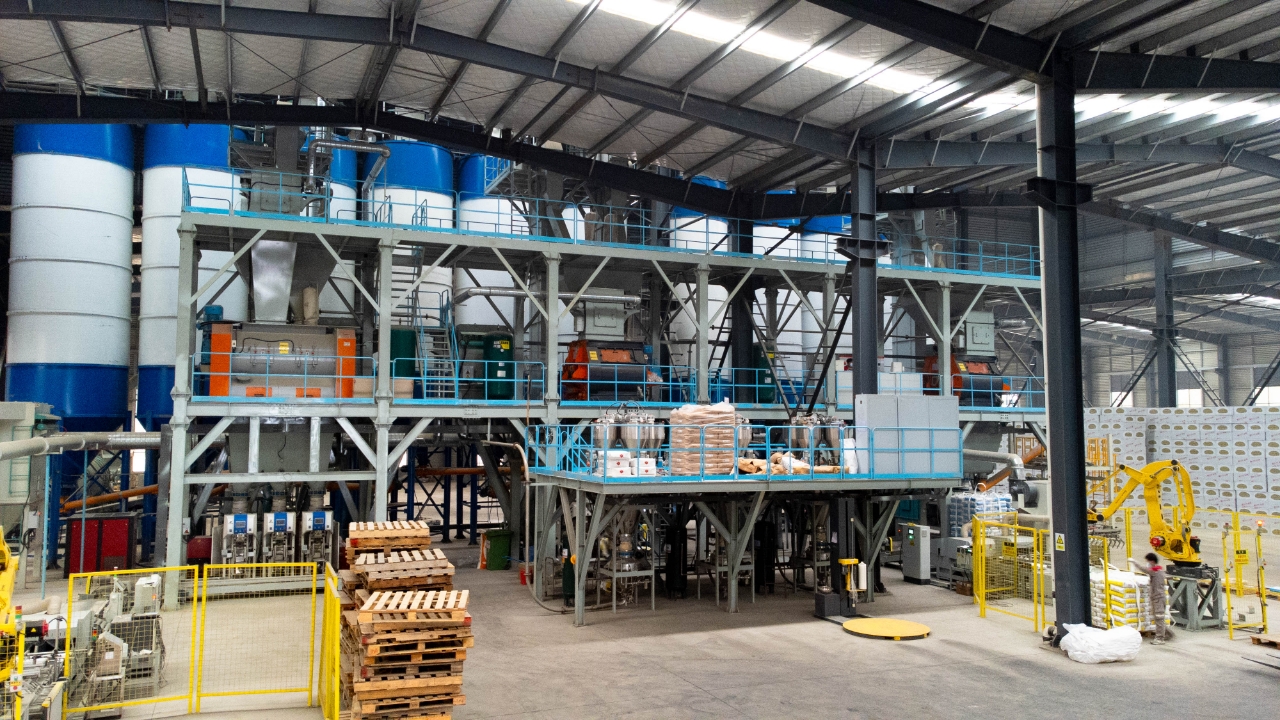
A Tile Adhesive Production Line is a fully integrated manufacturing system designed to produce high-quality dry mix mortar products through a continuous and automated process. Rather than operating as individual machines, every stage of production is connected into one coordinated system—from raw material handling to final packaging.
A complete production line typically includes:
- Raw material storage systems
- Sand drying and screening equipment
- Automatic batching and weighing systems
- Micro-additive dosing units
- High-efficiency mixers
- Finished product storage hoppers
- Automatic packing systems
- PLC intelligent control systems
Each subsystem works together to ensure every batch of tile adhesive meets strict quality standards while reducing labor requirements and improving production efficiency.
Why Modern Manufacturers Choose Automated Production
Construction material manufacturers today face increasing pressure to improve product consistency, reduce production costs, and satisfy growing market demand.
Manual production methods often lead to problems such as:
- Inconsistent product quality
- Formula deviation
- Excessive labor costs
- Dust pollution
- Low production efficiency
- Difficult quality control
A modern automatic tile adhesive production line solves these challenges through intelligent automation. PLC-controlled batching, precise additive dosing, and high-speed mixing allow manufacturers to produce consistent products while minimizing material waste.
For companies planning to build a tile adhesive manufacturing plant, investing in an automated production line not only increases production capacity but also improves long-term profitability and operational stability.
What Products Can Be Manufactured?
Although its primary purpose is producing tile adhesive, one production line can manufacture multiple dry mix products by changing production formulas stored in the PLC control system.
Typical products include:
Tile Adhesive Series
- Standard Tile Adhesive (C1)
- Improved Tile Adhesive (C2)
- Flexible Tile Adhesive
- Waterproof Tile Adhesive
- Polymer Modified Tile Adhesive
- Porcelain Tile Adhesive
- Large Format Tile Adhesive
- Thin Set Mortar
Dry Mortar Products
- Wall Putty
- Skim Coat
- Masonry Mortar
- Cement Plaster
- Waterproof Mortar
- Self-Leveling Mortar
- Gypsum-Based Mortar
This flexibility allows manufacturers to expand their product portfolio without investing in multiple independent production lines, significantly improving equipment utilization and return on investment.
Why Is Tile Adhesive Demand Growing Worldwide?
The rapid development of residential housing, commercial buildings, infrastructure projects, and urban renovation has created strong demand for high-performance tile installation materials.
Compared with traditional cement mortar, tile adhesive provides several important advantages:
| Traditional Cement Mortar | Tile Adhesive |
|---|---|
| Lower bonding strength | Strong adhesion |
| Easy to crack | Better flexibility |
| Higher material consumption | Thin-layer application |
| Difficult quality control | Stable factory-produced quality |
| Short service life | Long-lasting durability |
These advantages have made tile adhesive the preferred installation material for ceramic tiles, porcelain tiles, marble, granite, and large-format stone applications.
Growing construction activity across Africa, Southeast Asia, the Middle East, and South America continues to drive investment in new tile adhesive manufacturing facilities, creating strong demand for complete tile adhesive production plants and turnkey dry mortar factories.
Why Choose a Complete Production Line Instead of Individual Machines?
Many first-time investors initially consider purchasing individual machines separately. However, most experienced manufacturers eventually choose a complete production line because it provides significantly better efficiency and lower long-term operating costs.
A complete production line offers:
- Fully integrated material flow
- Automatic production control
- Higher mixing accuracy
- Lower labor requirements
- Reduced material waste
- Easier maintenance
- Greater production flexibility
- Higher overall production efficiency
Instead of manually transferring materials between different machines, every production stage is automatically connected through conveyors, elevators, storage silos, batching systems, mixers, and packing equipment.
This integrated design not only improves productivity but also ensures every batch maintains the same product quality.
What Will You Learn in This Guide?
Whether you are planning to build your first tile adhesive factory or expand an existing dry mortar production facility, understanding the complete manufacturing process is essential for making the right investment decisions.
In the following sections, we will explain:
- How raw materials are prepared before production
- Why sand drying plays a critical role in product quality
- How automatic batching ensures precise formulations
- The working principles of high-efficiency mixers
- Automatic packing and palletizing systems
- Complete equipment configuration for a tile adhesive production line
- Automation levels and production capacities
- Key factors affecting factory investment
- Frequently asked questions from global buyers
By the end of this guide, you will understand how a modern Tile Adhesive Production Line transforms raw materials into high-quality finished products while maximizing production efficiency and minimizing operating costs.
Related Resources
To help you better understand tile adhesive manufacturing and plan your investment, you may also be interested in:
Internal Articles
Authoritative External References
The European Adhesive & Sealant Industry (FEICA) — Offers information on adhesive technologies and industry developments.
The Portland Cement Association (PCA) — Explains cement-based materials and construction applications.