What Materials Can Be Mixed in a Double Shaft Gravity-Free Mixer? Complete Application Guide for Dry Mortar, Tile Adhesive & Chemical Powders
What Materials Can Be Mixed in a Double Shaft Gravity-Free Mixer?
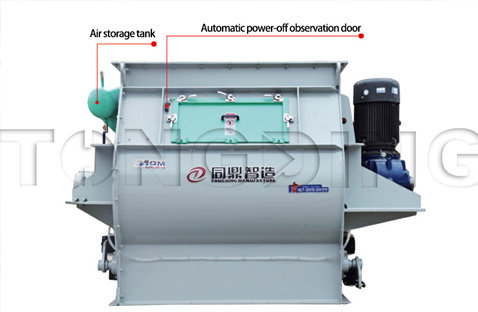
The Double Shaft Gravity-Free Mixer is one of the most versatile industrial mixing machines available today, capable of handling powders, granules, fibers, additives, and specialty materials with significantly different particle sizes and bulk densities.
This guide explains how the mixer works, what materials it can process, and why it is increasingly adopted across multiple industries.
How Does a Double Shaft Gravity-Free Mixer Work?
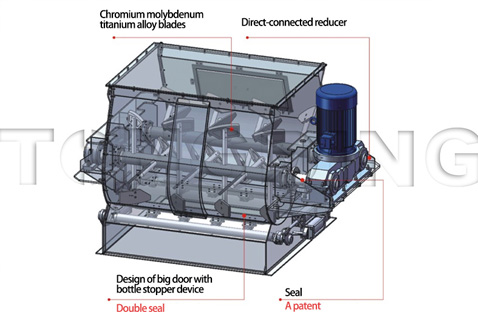
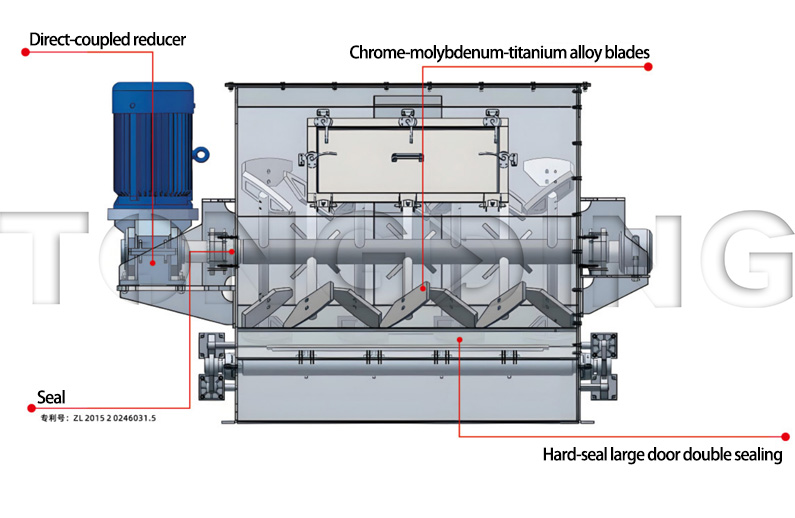
The mixer uses two counter-rotating shafts equipped with specially designed paddles. As the paddles rotate, materials are thrown upward and inward, creating an instantaneous weightless zone inside the mixing chamber. This allows particles to move in axial and radial directions simultaneously, achieving rapid homogeneous mixing.
Benefits for difficult materials:
- Fine powders – even distribution without agglomeration
- Heavy aggregates – uniform dispersion without settling
- Light additives – thorough integration without floating
- Fibers – even spread without clustering
Internal Link: Double Shaft Gravity-Free Mixer Product Page
What Types of Materials Can Be Mixed?
The double shaft gravity-free mixer is suitable for a wide range of materials across multiple industries. Below is a breakdown of the most common material types and applications.
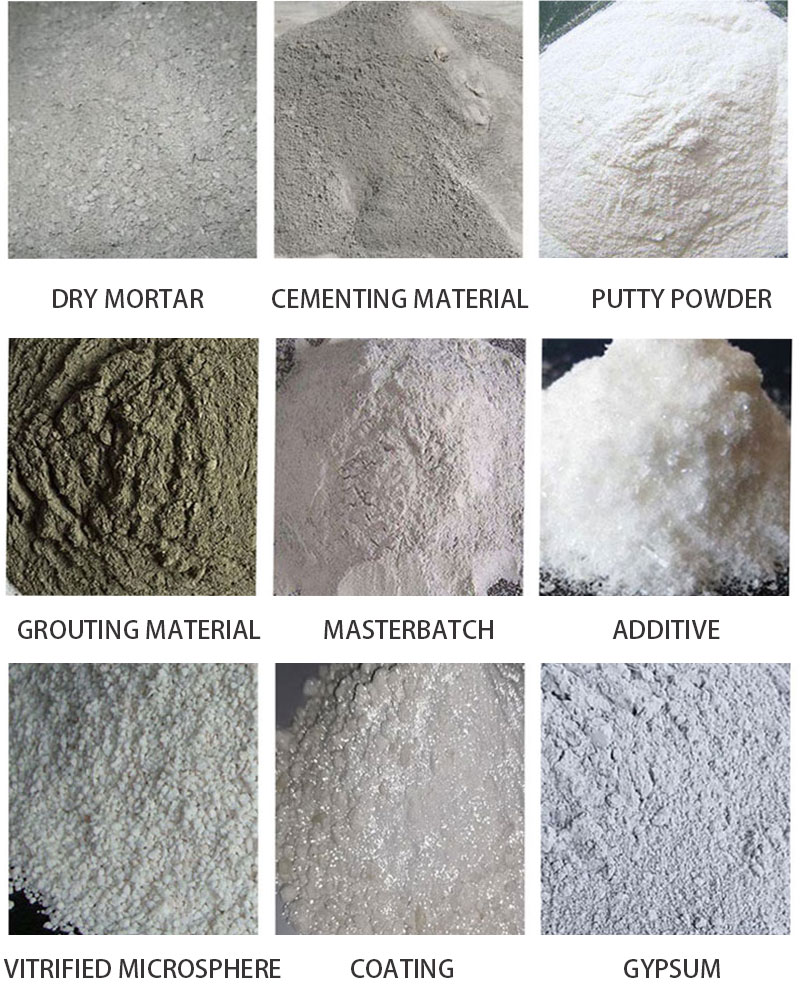
Dry Mortar Materials
- Materials: Quartz Sand, River Sand, Manufactured Sand, Cement, Fly Ash, Calcium Carbonate, Limestone Powder, Gypsum Powder
- Applications: Dry Mix Mortar, Tile Adhesive, Wall Putty, Masonry Mortar, Repair Mortar, Self-Leveling Mortar
Large density differences in dry mortar materials require uniform distribution, which gravity-free mixers achieve effectively.
Tile Adhesive Raw Materials
- Materials: Cement, Graded Sand, HPMC, RDP, Starch Ether, Calcium Formate
Micro-additives in tile adhesive formulations often account for less than 1% of the total batch. The mixer ensures these additives are evenly distributed throughout the mixture.
Internal Link: Tile Adhesive Production Line
Wall Putty Powder Materials
- Materials: Calcium Carbonate, Talcum Powder, White Cement, Cellulose Ether, Polymer Additives
Wall putty requires smooth texture and consistent whiteness, which depends on thorough mixing of fine powders.
Self-Leveling Mortar Materials
- Materials: Cement, Silica Sand, Gypsum, Superplasticizers, Additives
High flowability in self-leveling mortar requires extremely accurate mixing of all components.
Can a Gravity-Free Mixer Handle Chemical Powders?
Chemical powders are among the most common applications for gravity-free mixers.
Pigments and Color Powders
Examples: Iron Oxide, Titanium Dioxide, Carbon Black
Color consistency is critical. The mixer provides rapid dispersion without segregation, ensuring uniform color every batch.
Detergent Powders
Examples: Washing Powder, Cleaning Agents, Industrial Chemicals
Benefits include fast mixing, low residue, and high efficiency.
Plastic Additives and Masterbatch Powders
Examples: Masterbatch, PVC Additives, Fillers
Uniform additive distribution ensures consistent plastic product quality.
Can It Mix Refractory Materials?
Materials: Castables, Refractory Cement, Alumina Powder, Silica Powder
Heavy, abrasive materials require wear-resistant paddles and liners, which can be customized for refractory applications.
Can It Mix Agricultural Materials?
Fertilizer Blends
Examples: NPK Fertilizers, Compound Fertilizers, Trace Element Additives
Even nutrient distribution is essential for effective fertilizers.
Animal Feed Premixes
Examples: Vitamin Premixes, Mineral Premixes, Protein Powders
Accurate dosing and consistency are critical for animal feed production.
Can It Mix Fibers and Lightweight Materials?
Materials: Wood Fiber, Cellulose Fiber, Polypropylene Fiber, Glass Fiber
Fibers tend to float and cluster in conventional mixers. The three-dimensional weightless mixing action prevents agglomeration and ensures even distribution throughout the batch.
Can It Mix Materials with Different Bulk Densities?
| Material | Density |
|---|---|
| Quartz Sand | High |
| Cement | Medium |
| HPMC | Very Low |
| PP Fiber | Extremely Low |
Conventional mixers struggle with materials of vastly different densities. Gravity-free mixers excel at handling such combinations, achieving uniform distribution without separation.
Materials That May Require Special Design Considerations
Sticky Materials
Examples: High-moisture powders, certain chemicals
Abrasive Materials
Examples: Silica sand, refractory aggregates
Corrosive Materials
Examples: Chemical additives
Recommended Solutions: Stainless steel construction, wear-resistant liners, special coating options
How to Determine Whether Your Material Is Suitable
- ✔ Particle size
- ✔ Moisture content
- ✔ Bulk density
- ✔ Mixing cycle requirements
- ✔ Daily production capacity
- ✔ Abrasion level
- ✔ Corrosiveness
Consult our engineering team for a tailored material assessment.
Industries Using Double Shaft Gravity-Free Mixers
- Building Materials: Dry Mortar, Tile Adhesive, Wall Putty
- Chemical Industry: Pigments, Detergents, Additives
- Mining: Mineral Powders, Refractory Products
- Agriculture: Fertilizers, Feed Premixes
- Environmental Materials: Soil Stabilizers, Waste Treatment Additives
Double Shaft Gravity-Free Mixer vs Ribbon Mixer: Material Compatibility Comparison
| Material Type | Gravity-Free Mixer | Ribbon Mixer |
|---|---|---|
| Dry Mortar | Excellent | Good |
| Tile Adhesive | Excellent | Fair |
| Fibers | Excellent | Poor |
| Pigments | Excellent | Good |
| Chemical Powders | Excellent | Good |
| Heavy Aggregates | Excellent | Fair |
| Self-Leveling Mortar | Excellent | Poor |
Frequently Asked Questions
Can a gravity-free mixer mix wet materials?
Generally designed for dry or low-moisture materials. Wet materials may require specialized configurations.
Can it mix powders and granules together?
Yes. This is one of its biggest advantages.
What is the ideal filling ratio?
Usually 40%–70%.
Can one mixer produce different products?
Yes. It can switch between dry mortar, tile adhesive, wall putty, and other formulations.
Is stainless steel necessary?
Recommended for chemical, food-grade, or corrosive materials.
Conclusion
A Double Shaft Gravity-Free Mixer is not limited to dry mortar production. It can efficiently process construction materials, chemical powders, pigments, fertilizers, feed additives, refractory materials, fibers, and many other industrial products. Its ability to achieve rapid, uniform mixing across materials with vastly different particle sizes and bulk densities makes it one of the most versatile industrial mixing solutions available today.
Recommended Internal Links
- Dry Mortar Production Line
- Tile Adhesive Production Line
- Wall Putty Manufacturing Plant
- Industrial Sand Dryer
- Palletizing Robot System